

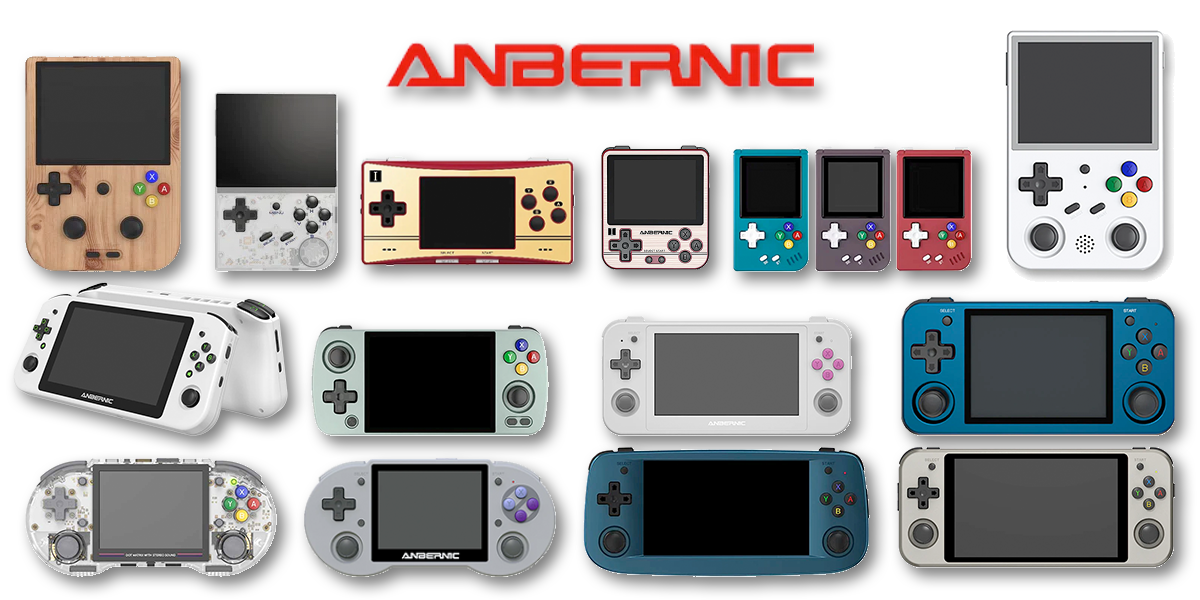
If you need a new Retro Game Handheld Device, you can buy here!
Directly from >>ANBERNIC<<
In conclusion, Visuino represents the maturation of the maker movement. Just as visual programming languages like Scratch taught a generation to code logic without memorizing keywords, Visuino teaches physical computing without the fear of compiler errors. It transforms the microcontroller from a cryptic brick into an accessible canvas. While it may never replace professional tools, its true value lies in empowerment. It lowers the threshold of entry so low that anyone with an idea—regardless of their coding background—can make their hardware blink, move, sense, and respond. In doing so, Visuino keeps the promise of Arduino alive: that electronics should be for everyone.
At its core, Visuino functions as a high-level compiler with a graphical user interface. Instead of typing pinMode(13, OUTPUT); and digitalWrite(13, HIGH); , the user drags a "Digital" widget onto the design surface, connects it to an "Analog" sink, and adjusts a property slider. The software automatically generates the underlying C++ code and uploads it to the board. This visual abstraction is not merely a gimmick; it represents a different cognitive approach to problem-solving. It allows the creator to think in terms of connections and data flow rather than procedural instructions. A temperature sensor isn’t a complex datasheet of registers; it is a block with a “Temperature” output pin that can be directly wired to a display block. visuino
Furthermore, Visuino excels at . The modern maker movement is flooded with cheap, complex sensors like the HC-SR04 ultrasonic distance sensor or the DHT11 humidity sensor. Programming these from scratch requires precise timing pulses and bitwise operations. Visuino packages these complexities into dedicated components. To use an ultrasonic sensor, one simply drags the "Ultrasonic Ranger" component, sets the trigger and echo pins, and reads the distance value. This lowers the barrier to entry so dramatically that a high school student can prototype a parking sensor in ten minutes, a task that might take a beginner coder several frustrating hours to debug. In conclusion, Visuino represents the maturation of the
However, Visuino is not without its critics. Seasoned embedded engineers often argue that it obscures essential learning. They contend that hiding the syntax of C++ prevents students from eventually writing optimized, low-level code. There is validity to this point; a user who only knows Visuino may be lost when faced with a non-supported sensor or a complex library. Additionally, the generated code, while functional, is rarely as efficient or lean as hand-written C++ by an expert. For professional products with tight memory constraints or high-speed requirements, Visuino would be a poor choice. While it may never replace professional tools, its
The rise of the Arduino ecosystem promised to democratize hardware hacking, making it possible for artists, designers, and hobbyists to create interactive electronic projects. Yet, for many newcomers, the first encounter with the standard Arduino IDE presents a formidable barrier: a blinking cursor, a sea of semicolons, and the unforgiving syntax of C++. This is where Visuino steps in. More than just a simplified tool, Visuino is a paradigm shift in microcontroller programming, using visual, drag-and-drop components to transform complex code into an intuitive flowchart of logic.