
 Magic all-pass filter
True Facial Mods | High Speed |
Critics of such modifications often appeal to the professional or social consequences—the fear of judgment, the closed door of employment, the stare of the stranger. This is not an invalid concern, for the face is our primary social interface. To modify it permanently is to willingly carry a sign that says, “My values are not your values.” And yet, this friction is precisely the point. The courage required to wear a true facial mod in a conformist society is a form of radical honesty. It is a filter in reverse: instead of hiding imperfections to attract the many, it broadcasts a specific set of values to attract the few. It repels the judgmental and draws the curious. In this way, the mod becomes a social winnowing tool, ensuring that the relationships which survive its gaze are built on a foundation of genuine acceptance, not superficial politeness.
Furthermore, true facial mods function as a powerful semaphore of identity in a world of mass-produced faces. Consider the uniformity of the “Instagram face”—the high cheekbones, the plump lips, the feline lift. It is a globalized aesthetic, a consumer product. A unique facial mod, however, is a story. A Maori tā moko tells the genealogy of its wearer. A subdermal implant speaks to a lifelong commitment to body modification as a spiritual or artistic practice. A split tongue or a coin-slot ear is a visual essay on the rejection of biological determinism. These modifications are not decorations; they are dialogues. They announce to the world, “I have chosen to be legible on my own terms.” In doing so, they perform a vital cultural function: they expand the very definition of what a face can be, challenging the tyranny of the “normal” and the “natural.” They remind us that nature, left to its own devices, is merely a starting point, not a prescription. true facial mods
To understand the value of a true facial mod, one must first distinguish it from the dominant paradigm of contemporary beauty: the temporary, reversible, and homogenizing filter. A digital filter is a lie of the moment—it removes pores, brightens eyes, and slims jaws to meet a standardized, often unattainable ideal. It is a performance of anxiety, a testament to our discomfort with reality. In contrast, a facial tattoo, a stretched piercing, or a carefully placed scar is a declaration of permanence. It cannot be swiped away at sunrise. It ages with the skin, wrinkles with the laugh lines, and fades under the same sun. This permanence forces a profound reconciliation with oneself. You cannot hate the nose under the filter, but you must learn to love the brow beneath the ink. The mod becomes a crucible for self-acceptance, forging a relationship with one’s own body that is rooted in deliberate choice, not passive dissatisfaction. Critics of such modifications often appeal to the

Different looks?
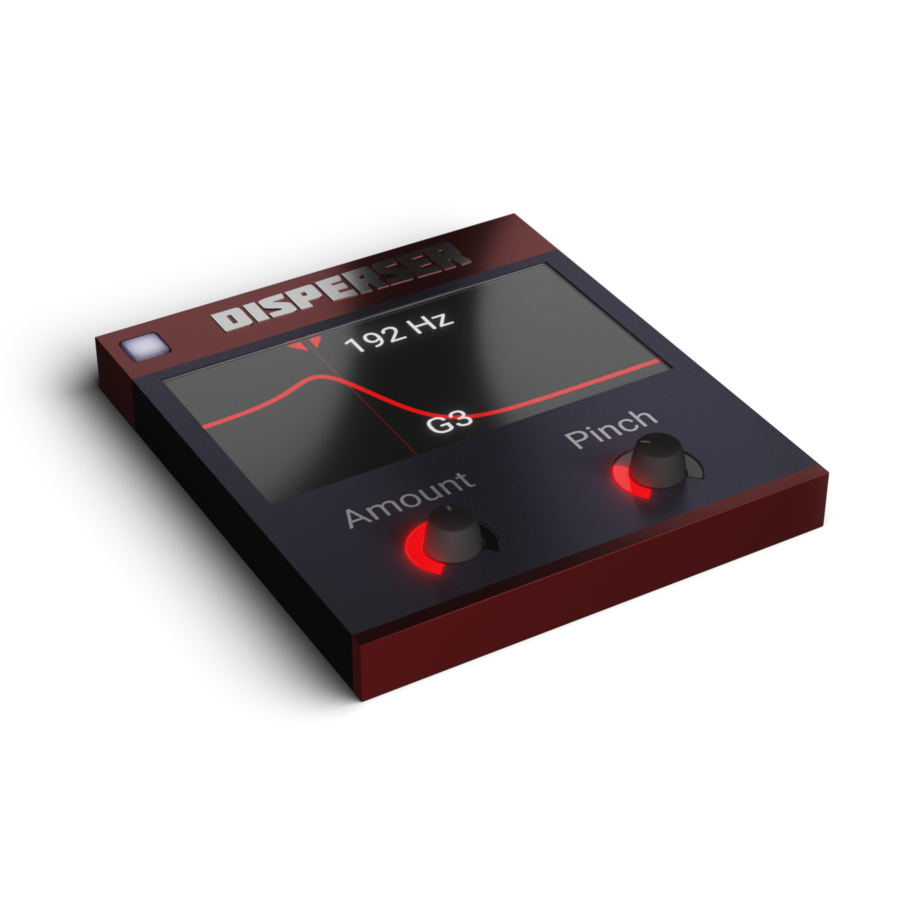
When you add Disperser to any track in your DAW on it's own, it will have it's original appearance.
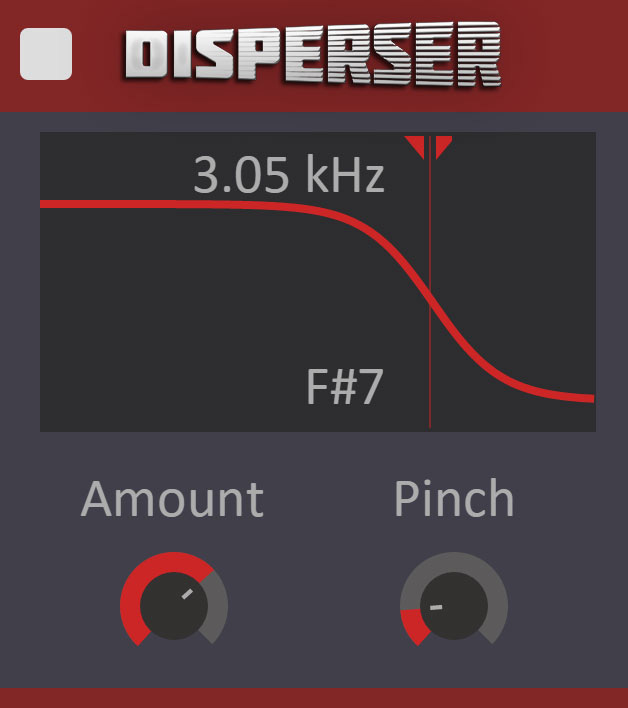
When we created the snapin system with it's hosts we had to make a way for it to fit there. So that's why it has a snapin-appearance too. But don't worry, all the same controls appear in both looks!
True Facial Mods | High Speed |
Frequency
Adjusts the cutoff frequency of the filter. Simply click and drag the vertical line in the frequency window.
Amount
Adjusts how pronounced the effect is by increasing the order of the all-pass filter.
Pinch
Adjusts the Q setting of the filter, which will have the effect of concentrating the delay around the cutoff.
True Facial Mods | High Speed |


Disperser is one of those plugins that does something you probably didn't think was possible, until you hear it.

What we love so much about Disperser is the fact that it can really give that extra power to basslines, to give that extra impact that we think is not possible with just boosting the lows with a standard EQ.
It's like audio monosodium-glutamate!

True Facial Mods | High Speed |
Subscribe to Own
All our plugins and Content Banks are included in the Kilohearts Subscription. The subscription also gives you instant access to all new releases as soon as they are available.
For every 12 months you subscribe, you'll also get a $100 in Subscriber Rewards to put towards permanent licenses for any of our products.
Resources
System requirementsManual
All Products
Join the community
Facebook GroupDiscord Chat