Our tool Pinterest Video Downloader is the best tool on the internet to Download Pinterest Videos. Our tool Pinterest Downloader provides you Pinterest Video Download of Photo, Video and Gifs Downloading from Pinterest in original high quality. PinDownload.io tool offers you a wide range of downloading options. If you want to download video you can download video easily in MP4, but there is one more option to download, which is the cover image. If you want to download the Pinterest video cover image, then we have an option for that.
We are the best in Pinterest video downloader tool, our service is best in class, and we are providing super fast downloading with a completely secure way to Pinterest Video Download. Our tool always takes care of our users. We take very serious our user experience and downloading services and we respect your time, so we always focus on delivering a seamless downloading service. Our priority is to always serve you the best Pinterest Video Download service effortlessly, effectively, and with lightning-fast downloading.
We have made our tool simple to compare with any other tool and we really provide fast downloads from them. Our tool, Pinterest Downloader is fully secure and completely free to use, you do not have to pay nothing to use our Pinterest video downloading service and also no worries about the login or signup because you do not need here to create account for any Pinterest Video Download.
Want to save interesting Ideas, Design, Wallpaper and anything from Pinterest. Pindownload.io, Pinterest Video Downloader is an amazing tool for you. We solve problems through our Pinterest Video Download, so our users download content according to their own requirements.
Pinterest Downloader is completely free Lifetime. Enjoy seamless downloading without any interruption.
Download any Pinterest Video, Photo, and Gifs without a watermark. Just save the video with a clean voice and video with no watermark.
Pindownload.io is a quick Pinterest video downloading tool. You do not want to login or register on the tool. You are freely to use without login or signup.
Pindownload.io always provides the original uploaded quality of Pinterest video Download. We never compromised on the High Quality.
Our tool is the fastest Pinterest video downloading tool on the Internet. You get the best downloading speed, and you don't need to log in, so we always care about your safety.
Our web-based Pinterest Downloader tool supports all kinds of devices. It doesn't matter if you have an Android, an iPhone, a Mac, or a PC.
We made our tool really simple for Pinterest Video, Photo & GIF downloading. We designed our Pinterest Downloader more simpler to use anyone. You just paste the link and download your favorite content in Simple steps. Here's the simple step breakdown.
Open Pinterest app or website and copy the URL of the video you want to download.
Paste the copied link into our download box and click the download button.
Select your preferred Button and tap download to save it to your device.
Using our Pinterest Downloader tool is always be simple. Now you understand how simple to use our tool Pindownload.io
We are really happy to provide you with this kind of Pinterest Downloader tool that helps you to save your time and your favorite Pinterest video Download in a really simple way.
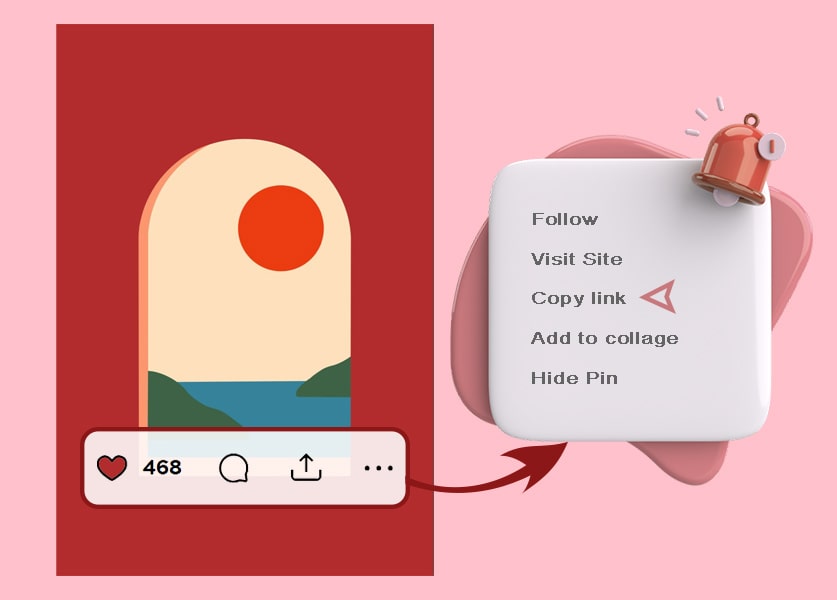
Open Pinterest app
Choose the post that you want to download
Click on the 3 Dots...
Now click copy link
Go to pindownload.io
Paste the copied link in search box and click search button
Now click the download button
Check download item in your gallery
A more subtle but equally important factor affecting astronomical season dates is the concept of apsidal precession . The Earth’s elliptical orbit itself slowly rotates over a period of about 112,000 years. This means that the point in the orbit where Earth is closest to the Sun (perihelion) slowly shifts relative to the seasons. Currently, perihelion occurs in early January, making Northern Hemisphere winters slightly milder. In about 10,000 years, perihelion will align with the September equinox, altering the length and intensity of the seasons themselves. While this does not change the date of the equinox on our calendar, it would change the orbital context of that date, potentially leading to a future where the calendar’s seasonal dates no longer accurately reflect the planet’s actual thermal seasons.
In conclusion, when we speak of season date changes, we are discussing two different realities. The first is a predictable, mechanical dance between our human-made calendar and the Earth’s orbit—a fascinating quirk that causes the vernal equinox to wander between March 19th and 21st. The second is a profound and alarming ecological transformation, where the reliable timing of seasonal events is being rewritten by a warming planet. One is a harmless curiosity of timekeeping; the other is a planetary red flag. As we mark the astronomical start of a season on a specific date, it is increasingly important to remember that nature follows its own schedule—a schedule that is, for the first time in human civilization, in rapid and uncertain motion.
For most of human history, the changing of the seasons was a matter of direct, tangible observation: the first frost, the return of migratory birds, or the softening of the ground in spring. In the modern era, we have codified these transitions into precise calendar dates. However, a closer look reveals that these dates are not fixed. The question of “season date changes” operates on two distinct levels: the astronomical variability of equinoxes and solstices, and the profound, long-term climatic shifts that are literally redrawing the boundaries of what we consider “normal” seasonal weather. Both phenomena challenge our perception of seasonal stability, though they operate on vastly different timescales.
These shifts have cascading ecological consequences. Mismatches are developing in synchronized natural events: migratory birds may arrive at their breeding grounds after the peak of the insect emergence they depend on, or pollinators may emerge before the flowers they service have bloomed. For human society, earlier springs and longer summers can extend the season for allergies and disease-carrying ticks, while also exacerbating the risk and duration of summer heatwaves and wildfires. The very definition of a “season” is becoming blurred, with transitional periods like spring and autumn shrinking as summer extends its grip and winter’s cold retreats.
While the astronomical shifts are cyclical and predictable, the second type of seasonal date change is far more urgent and consequential: the bioclimatic shift driven by anthropogenic global warming. This is not a matter of a solstice arriving six hours earlier, but of the fundamental character of the seasons being altered. In the Northern Hemisphere, meteorological spring is now arriving, on average, several days earlier than it did fifty years ago. Data from the National Phenology Network shows that leaves are emerging earlier, flowers are blooming sooner, and the last spring frost is arriving earlier in many regions. Concurrently, the first autumn frost is arriving later, effectively lengthening the growing season and delaying the onset of winter.
The first and most familiar type of seasonal date change is astronomical. The four seasons—spring, summer, autumn, and winter—are astronomically defined by the solstices (longest and shortest days) and equinoxes (equal day and night). Contrary to popular belief, these events do not occur on the same calendar date each year. For example, the vernal equinox can fall on March 19, 20, or 21. This variability is not a random error but a direct consequence of the mechanics of our calendar system. The Earth’s orbit around the Sun takes approximately 365.2422 days—a quarter-day more than the 365-day common year. To compensate for this discrepancy, we add a leap day every four years (with some exceptions). This “catching up” process causes the precise moment of the equinox or solstice to shift by roughly six hours each year, snapping back when a leap day is inserted. Therefore, the minor, predictable drift of seasonal dates is not a sign of environmental change, but rather a testament to the elegant, if imperfect, human attempt to harmonize our civil calendar with the celestial mechanics of a tropical year.
Our Pindownload.io tool is a perfect Pinterest Video Downloader tool to download your favourite content from Pinterest. We design our tool to recognise to solve every problem of users in terms of Pinterest Downloading. We provide you Pinterest Video Download exactly what you see on Pinterest with Original High Quality and it's original form like mp4, jpeg, webp, gifs.
Our Pinterest Video Downloader is not just for simple video Downloading tool. It's a powerful tool to save all kinds of content from Pinterest. Here we describe more.
Pinterest Video Download: You can seamlessly download any public video from Pinterest without losing any quality. We support all kinds of formats, and we save Pinterest videos directly to your phone gallery.
Pinterest Gif Download: Our web app tool also provides you Pinterest gifs downloading. You just choose your favorite animated GIFs and copy their link and paste into our tool for simple downloading in original size quality.
Pinterest Photo Download: We are all rounder tool that also provides you Pinterest Image Downloads and your image quality you get what you exactly see on Pinterest. We sync the original uploaded highest quality and serve you to for your download.
PinDownload.io is not responsible for any media that users download from here. PinDownload.io allows you to download publicly available media/content from Pinterest for which the corresponding owner has given download permission. We do not provide tools to bypass privacy settings or access restricted content.
PinDownload.io does not host, store, or re-upload any photos, videos, or GIFs on our servers. All media files are fetched directly from the CDN servers by users.
PinDownload.io is not affiliated with or endorsed by Pinterest. All trademarks, logos, and brand names are the property of their respective owners.
Users are responsible for ensuring their use of downloaded content complies with the original creator's terms.
Kindly read our Terms of Use before using this website. By using our website, you have accepted the "Terms & Conditions".
A more subtle but equally important factor affecting astronomical season dates is the concept of apsidal precession . The Earth’s elliptical orbit itself slowly rotates over a period of about 112,000 years. This means that the point in the orbit where Earth is closest to the Sun (perihelion) slowly shifts relative to the seasons. Currently, perihelion occurs in early January, making Northern Hemisphere winters slightly milder. In about 10,000 years, perihelion will align with the September equinox, altering the length and intensity of the seasons themselves. While this does not change the date of the equinox on our calendar, it would change the orbital context of that date, potentially leading to a future where the calendar’s seasonal dates no longer accurately reflect the planet’s actual thermal seasons.
In conclusion, when we speak of season date changes, we are discussing two different realities. The first is a predictable, mechanical dance between our human-made calendar and the Earth’s orbit—a fascinating quirk that causes the vernal equinox to wander between March 19th and 21st. The second is a profound and alarming ecological transformation, where the reliable timing of seasonal events is being rewritten by a warming planet. One is a harmless curiosity of timekeeping; the other is a planetary red flag. As we mark the astronomical start of a season on a specific date, it is increasingly important to remember that nature follows its own schedule—a schedule that is, for the first time in human civilization, in rapid and uncertain motion. season date changes
For most of human history, the changing of the seasons was a matter of direct, tangible observation: the first frost, the return of migratory birds, or the softening of the ground in spring. In the modern era, we have codified these transitions into precise calendar dates. However, a closer look reveals that these dates are not fixed. The question of “season date changes” operates on two distinct levels: the astronomical variability of equinoxes and solstices, and the profound, long-term climatic shifts that are literally redrawing the boundaries of what we consider “normal” seasonal weather. Both phenomena challenge our perception of seasonal stability, though they operate on vastly different timescales. A more subtle but equally important factor affecting
These shifts have cascading ecological consequences. Mismatches are developing in synchronized natural events: migratory birds may arrive at their breeding grounds after the peak of the insect emergence they depend on, or pollinators may emerge before the flowers they service have bloomed. For human society, earlier springs and longer summers can extend the season for allergies and disease-carrying ticks, while also exacerbating the risk and duration of summer heatwaves and wildfires. The very definition of a “season” is becoming blurred, with transitional periods like spring and autumn shrinking as summer extends its grip and winter’s cold retreats. In conclusion, when we speak of season date
While the astronomical shifts are cyclical and predictable, the second type of seasonal date change is far more urgent and consequential: the bioclimatic shift driven by anthropogenic global warming. This is not a matter of a solstice arriving six hours earlier, but of the fundamental character of the seasons being altered. In the Northern Hemisphere, meteorological spring is now arriving, on average, several days earlier than it did fifty years ago. Data from the National Phenology Network shows that leaves are emerging earlier, flowers are blooming sooner, and the last spring frost is arriving earlier in many regions. Concurrently, the first autumn frost is arriving later, effectively lengthening the growing season and delaying the onset of winter.
The first and most familiar type of seasonal date change is astronomical. The four seasons—spring, summer, autumn, and winter—are astronomically defined by the solstices (longest and shortest days) and equinoxes (equal day and night). Contrary to popular belief, these events do not occur on the same calendar date each year. For example, the vernal equinox can fall on March 19, 20, or 21. This variability is not a random error but a direct consequence of the mechanics of our calendar system. The Earth’s orbit around the Sun takes approximately 365.2422 days—a quarter-day more than the 365-day common year. To compensate for this discrepancy, we add a leap day every four years (with some exceptions). This “catching up” process causes the precise moment of the equinox or solstice to shift by roughly six hours each year, snapping back when a leap day is inserted. Therefore, the minor, predictable drift of seasonal dates is not a sign of environmental change, but rather a testament to the elegant, if imperfect, human attempt to harmonize our civil calendar with the celestial mechanics of a tropical year.