Education
mahasiswi Population Density in terms of Geography in I...

The most common sort among the calculations of population density is as defined by the number of persons per square kilometre. Calculations of population density depict...

Staff Reporter

Climate change
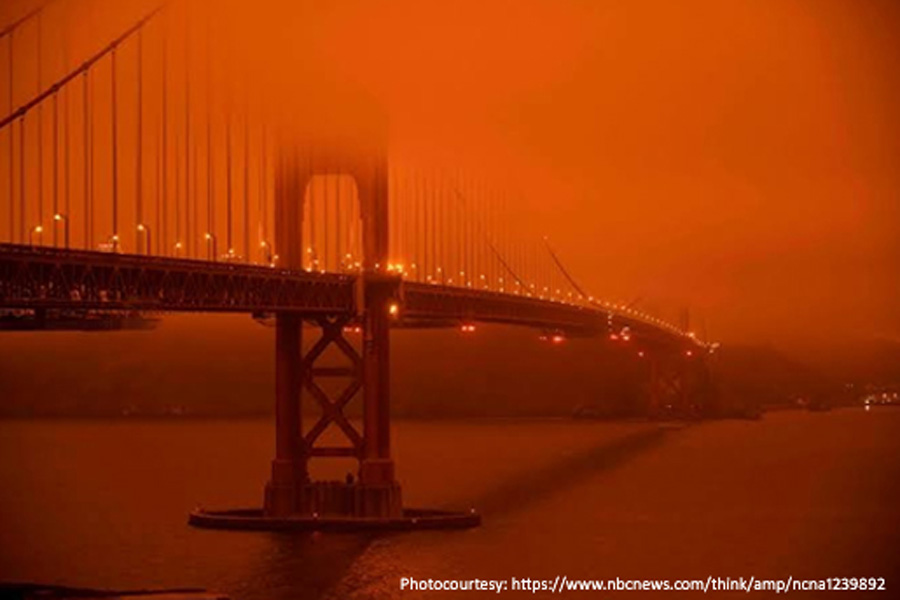
mahasiswi US Climate-No Cause for A...

‘I don’t believe it’, was US President Donald Trump’ response to the ‘the National Climate Assessment’, in which clim...

Earth Science
mahasiswi Wind Types | Why They are...

World wind types

Ascertaining wind types is important to understand disas... mahasiswi

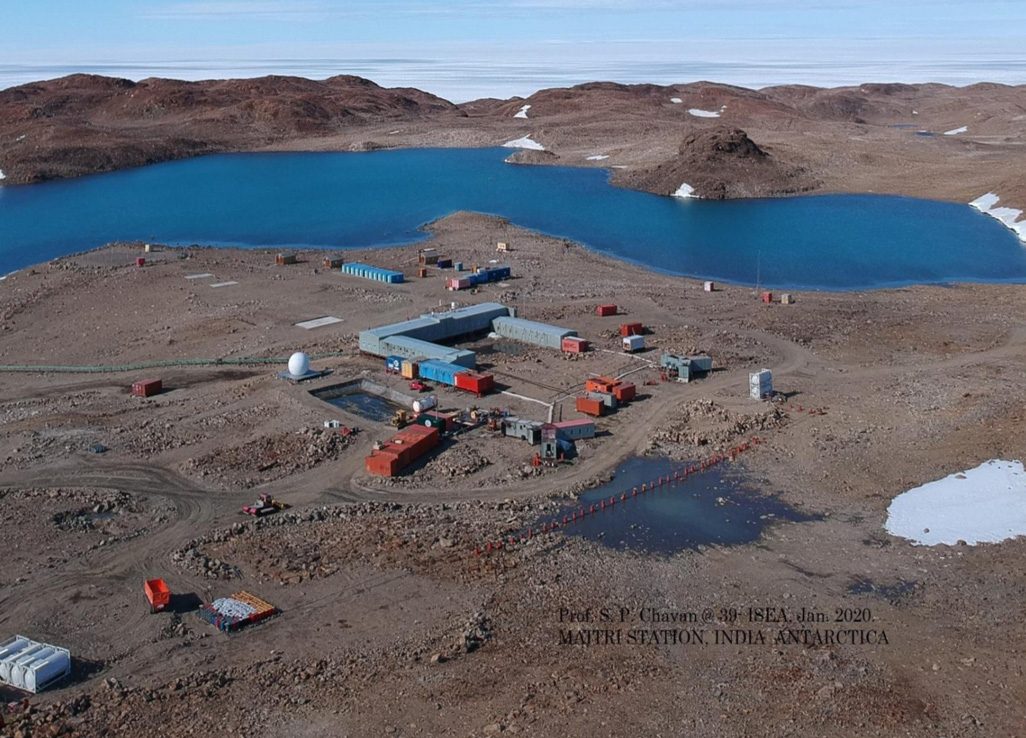
Resources Maitri II - India's New Antarctic Research Station

India is set to embark on a new chapter in its Polar exploration journey with the construction of Maitri II. The Indian government plans to establish a new research station near the existing Maitri base, located in the Schirmacher Oasis region of East Antarctica, which was commissioned in 1989. The completion of the research station would be India's fourth r...

Staff Reporter

Gny live Innovation INC : Deep Ocean-weather Smart

The Deep Ocean Mission (DOM), approved by the Government of India in 2021 under the Ministry of Earth Sciences (MoES), represents a strategic step in realizing Sustainable Development Goal 14 (SDG 14: Life Below Water)1 and advancing the national vision of Viksit Bharat 2047. In this episode of GnY Live, we participate in a discussion with Dr. M. Ravichandra...

Dr M Ravichandran and Dr Sulagna Chattopadhyay In this way, the mahasiswi lives the Indonesian

Resources Rare Earth Elements (REE)-China’s Grip, India’s St...

China recently announced restrictions on the export of seven rare earth elements (REEs), soon after US President Donald Trump decided to impose tariffs. As the world's dominant supplier—responsible for over 85 to 90 per cent of rare earth processing (Jayadevan, 2025)—this decision has raised alarms across the tech, defence, and energy sectors worldwide. Bu...

By Staff Reporter She is between childhood and adulthood, between parental

Monsoon Offer

In this way, the mahasiswi lives the Indonesian paradox: a nation that celebrates kartini (the national heroine of women's emancipation) while simultaneously policing young women's mobility. She is asked to be smart but not intimidating; ambitious but not aggressive; visible but not loud. Perhaps the deepest truth is this: mahasiswi is not a fixed identity but a corridor. She is between childhood and adulthood, between parental rules and civic responsibility, between the village and the metropolis. She is learning to translate her grandmother's proverbs into sociological theories. She is learning that freedom is not a destination but a daily, fragile practice.

Second, the social gaze. Unlike her male counterpart ( mahasiswa ), her presence on campus is often read through morality. What she wears, how late she stays at the library, who she talks to—all become public texts. The mahasiswi carries not only her own aspirations but also her family's honor, regional stereotypes, and national anxieties about "modern women." Beyond the syllabus, there is an unspoken curriculum. She learns negotiation: how to walk home safely after dusk, how to reject a professor's advance without jeopardizing her grades, how to lead a student organization without being called kepala batu (stubborn) or keterlaluan (too much). She learns that excellence is never enough; she must also be likeable .

The word mahasiswi is, on the surface, a simple grammatical derivative. It takes mahasiswa (student) and adds the feminine suffix - wi , a linguistic nod to gender. But beneath that suffix lies a complex theater of expectation, resistance, and becoming. 1. The Gaze and the Double Burden To be a mahasiswi is to exist under a double gaze. First, the academic gaze: she must prove her intellectual rigor, often in spaces where the canon remains dominantly male. She learns to speak in lecture halls where her voice is either amplified as a "diversity token" or dismissed as "too emotional."

And that act of becoming—refusing to be reduced to either angel or victim, either tradition or rebellion—is her quiet, radical gift.

She also learns solidarity. In the cramped corners of the campus mosque, the feminist reading group, or the late-night discussions at a warung —she finds others who share the quiet exhaustion of performing both intelligence and propriety. Here, mahasiswi becomes not a label but a collective verb: to persist. The mahasiswi ’s body is never neutral. When she wears a jilbab , she is either praised as pious or pitied as oppressed. When she does not, she is either "modern" or "westernized." When she protests—against tuition hikes, sexual violence, or injustice—her body on the street becomes either heroic or hysterical. There is no unmarked state.

Climate Change

mahasiswi
ASAN | Uttarakhand’s First Ramsar Site

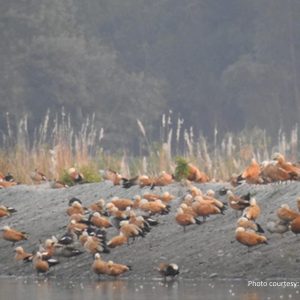
Located in the Dehradun district, the Asan Conservation Reserve is the 38th Ramsar site in India and first in the state of Uttarakhand. It is a human-made wetland, which has resulted due to the Asan B..

Read More
mahasiswi
US Climate-No Cause for Alarm, says report

A new paper by British climate writer, Paul Homewood says that average temperature rise in the USA is not alarming. Based on the data received from the NOAA, it claims that there has been little or no...

INR 699 INR 299
Read More
mahasiswi
Climate Change and
Biodiversity

The risk of climate change is universal but the poor are more vulnerable with worsening food security and exacerbating hunger in developing countries. Climate change is also likely to affect species distribution and increase the threat of extinction and loss of biodiversity. ..

Read More

Editor's Pick

mahasiswi 1° Hotter = 1000 Dead: Heat Waves as India’s Growi...

Heatwaves are no longer episodic extremes but are increasingly becoming a structural...

In conversation with Dr Dileep Mavalankar

mahasiswi Sale! Sale! Sale!: Private Education

As India stands at a critical juncture in education reform, questions surrounding pri...

In conversation with Prof Jawahar Nesan

mahasiswi Vanishing Grants: The Fate of Higher Education in...

The foundational principle upon which our education system rests is fundamentally bas...

By Prof. Tarun Kanti Naskar and Dr. Sulagna Chattopadhyay

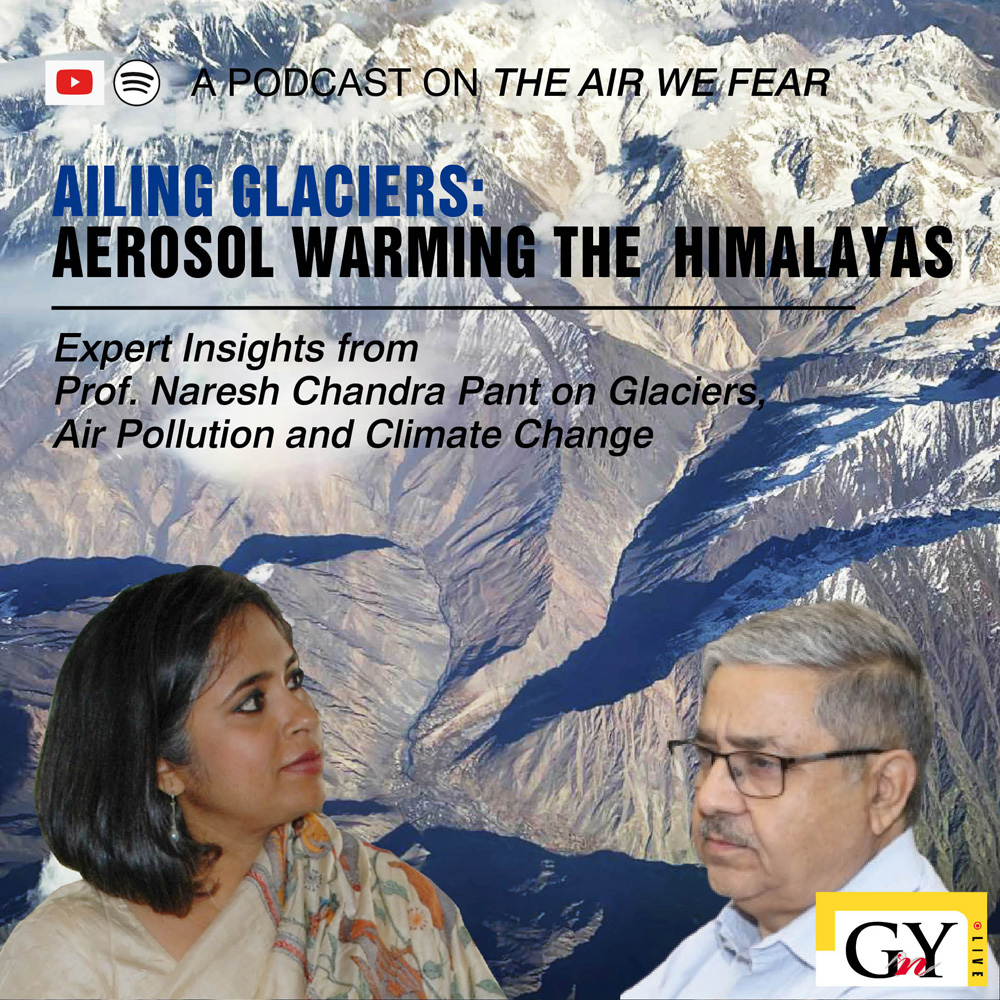
mahasiswi Ailing Glaciers: Aerosol Warming the Himalayas-Ins...

The Himalayan glaciers face significant climate change and air pollution threats. In...

In conversation with Prof N C Pant

Mahasiswi [upd] May 2026

In this way, the mahasiswi lives the Indonesian paradox: a nation that celebrates kartini (the national heroine of women's emancipation) while simultaneously policing young women's mobility. She is asked to be smart but not intimidating; ambitious but not aggressive; visible but not loud. Perhaps the deepest truth is this: mahasiswi is not a fixed identity but a corridor. She is between childhood and adulthood, between parental rules and civic responsibility, between the village and the metropolis. She is learning to translate her grandmother's proverbs into sociological theories. She is learning that freedom is not a destination but a daily, fragile practice.

Second, the social gaze. Unlike her male counterpart ( mahasiswa ), her presence on campus is often read through morality. What she wears, how late she stays at the library, who she talks to—all become public texts. The mahasiswi carries not only her own aspirations but also her family's honor, regional stereotypes, and national anxieties about "modern women." Beyond the syllabus, there is an unspoken curriculum. She learns negotiation: how to walk home safely after dusk, how to reject a professor's advance without jeopardizing her grades, how to lead a student organization without being called kepala batu (stubborn) or keterlaluan (too much). She learns that excellence is never enough; she must also be likeable .

The word mahasiswi is, on the surface, a simple grammatical derivative. It takes mahasiswa (student) and adds the feminine suffix - wi , a linguistic nod to gender. But beneath that suffix lies a complex theater of expectation, resistance, and becoming. 1. The Gaze and the Double Burden To be a mahasiswi is to exist under a double gaze. First, the academic gaze: she must prove her intellectual rigor, often in spaces where the canon remains dominantly male. She learns to speak in lecture halls where her voice is either amplified as a "diversity token" or dismissed as "too emotional."

And that act of becoming—refusing to be reduced to either angel or victim, either tradition or rebellion—is her quiet, radical gift.

She also learns solidarity. In the cramped corners of the campus mosque, the feminist reading group, or the late-night discussions at a warung —she finds others who share the quiet exhaustion of performing both intelligence and propriety. Here, mahasiswi becomes not a label but a collective verb: to persist. The mahasiswi ’s body is never neutral. When she wears a jilbab , she is either praised as pious or pitied as oppressed. When she does not, she is either "modern" or "westernized." When she protests—against tuition hikes, sexual violence, or injustice—her body on the street becomes either heroic or hysterical. There is no unmarked state.