Highest Box Office Collection In India Link Here
Edit, transform and enhance photos with text prompt
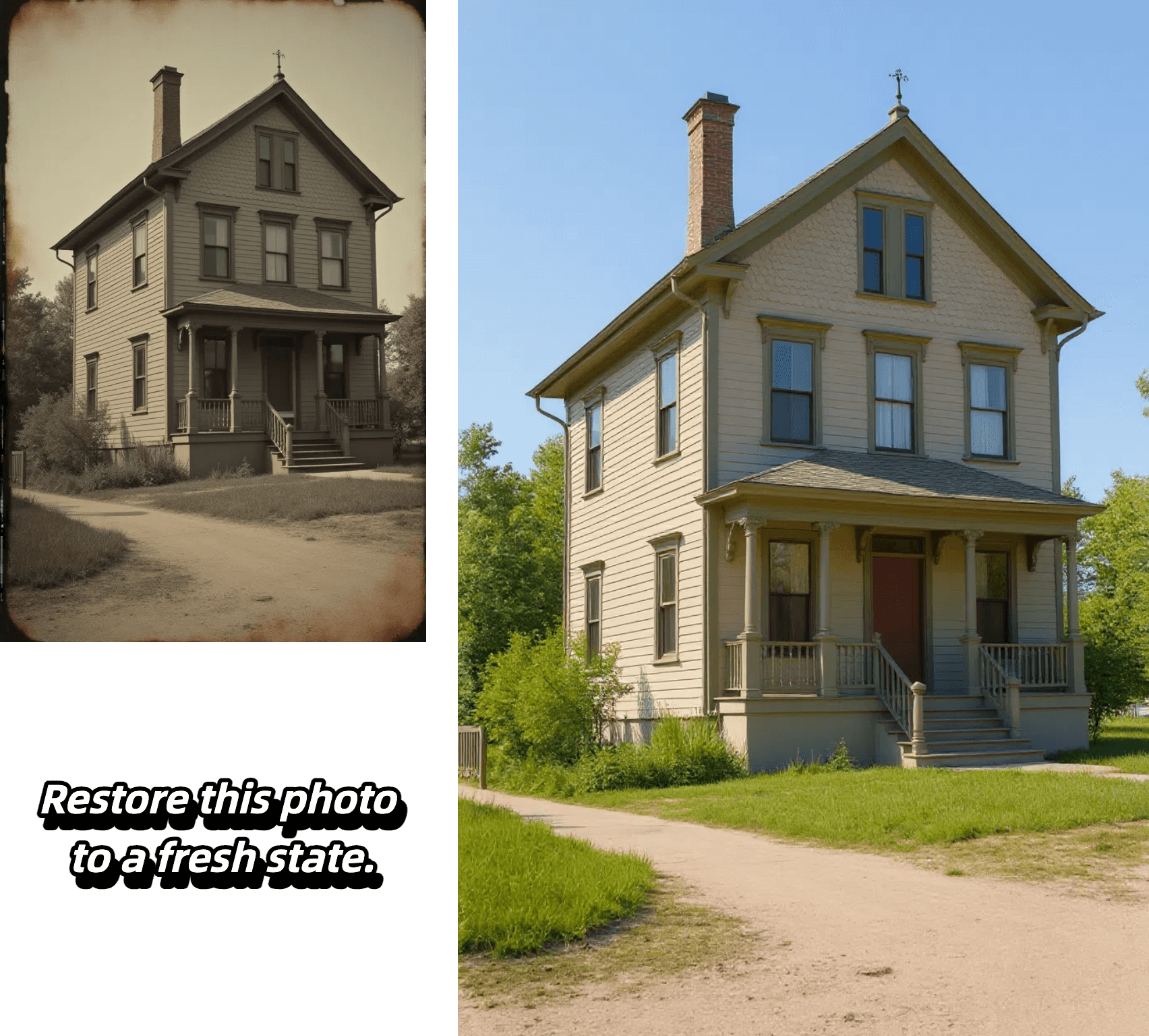

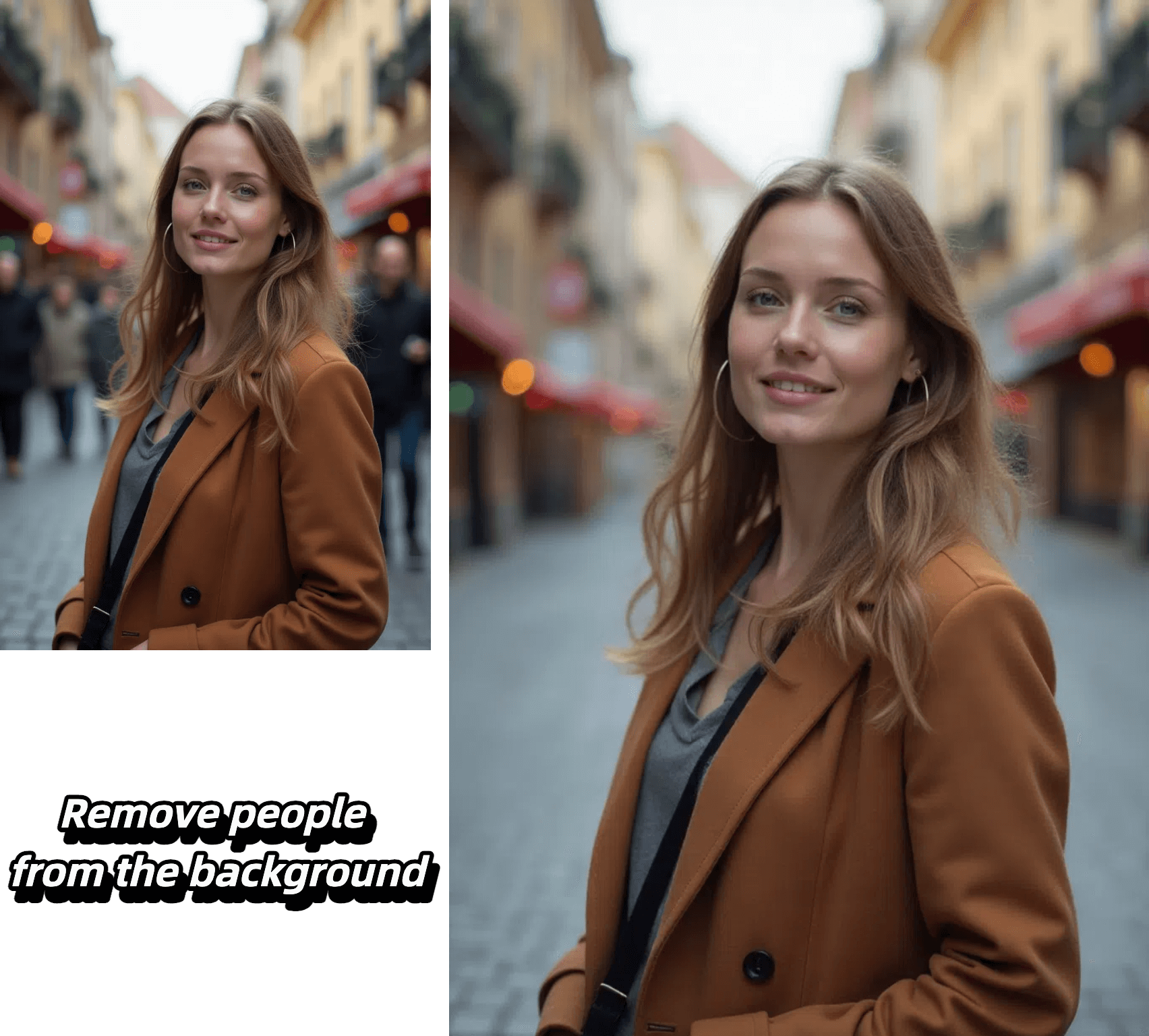
Edit, transform and enhance photos with text prompt

Alter poses, outfits, or backgrounds while our AI keeps your character's face, proportions, and style perfectly consistent from frame to frame.

Select any region—eyes, sky, or logo—and refine it with pixel-level accuracy. Our model isolates the area and applies exactly the adjustment you specify, leaving the rest untouched.

Insert crisp, naturally integrated text into photos in seconds—perfect for captions, call-outs, or branding—without tedious masking or layering.

Upload a reference image, choose a style, and let the AI recreate your photo with matching colors, textures, and mood while preserving key composition details.
Experience effortless image editing with our AI-powered process:

Select the AI model that best suits your editing needs. Each model is optimized for different types of transformations.
Start by uploading your image. We support JPEG, PNG, GIF, or WEBP formats up to 20MB and 4096 x 4096 pixels. For best results, use clear, high-quality images.
Tell our AI exactly what changes you want to make. Be specific about your desired edits - from changing backgrounds to adjusting styles and effects.
Generate multiple variations of your edited image, review the results, and select your favorite outputs. Download your transformed images in high quality.
Discover the advantages that make our platform the smart choice for AI-powered image editing:
Our AI precisely maintains character features, facial details, and core elements while applying transformations. Whether editing backgrounds, poses, or styles, your subject's key characteristics remain perfectly consistent.
Target specific areas with pixel-level accuracy - from eyes to backgrounds to logos. Our AI isolates and modifies exactly what you specify while intelligently preserving surrounding elements.
From seamless text integration to style transfers, our platform offers comprehensive editing capabilities. Transform images with reference-based styling, add natural-looking text, and modify everything from colors to lighting with precise control.
Generate multiple high-quality variations in seconds, perfect for rapid prototyping and commercial projects. Create content ready for marketing, branding, social media, and more without complex editing software.
The 1990s and 2000s saw a paradigm shift with the rise of the "Khan triumvirate"—Shah Rukh, Salman, and Aamir. Films like Dilwale Dulhania Le Jayenge (1995) and Hum Aapke Hain Koun..! (1994) demonstrated the power of the Non-Resident Indian (NRI) audience, unlocking the overseas market as a critical revenue stream. Aamir Khan’s 3 Idiots (2009) and Dhoom 3 (2013) broke domestic and international records, showcasing that content-driven, socially relevant narratives could achieve mass appeal. However, these films largely remained within the Hindi heartland and diaspora, limiting their ceiling compared to what would follow.
A significant story is the decline of Hindi-only dominance. Of the current top 5 domestic earners, three ( Baahubali 2 , KGF 2 , RRR ) originate from the South Indian film industries (Telugu and Kannada). Hindi cinema’s biggest hits ( Jawan , Pathaan , Stree 2 ) now often borrow directors, action choreographers, or leads from the South. The future belongs to "content-neutral" cinema—films that succeed on spectacle, emotion, or humour regardless of their origin language. highest box office collection in india
For decades, the benchmark of Indian box office success was defined by a single name: Sholay (1975). While precise tracking in the pre-digital era is challenging, Sholay is widely acknowledged to have earned an inflation-adjusted gross equivalent to over ₹2,000 crore (approximately $270 million USD in today’s terms). Its initial run of over five years in a single Mumbai theater—a phenomenon unthinkable today—speaks to a different era of exhibition, where films had extraordinarily long tails. Sholay did not rely on opening weekend fireworks but on word-of-mouth, repeat viewership, and a cultural saturation that turned its characters and dialogues into folklore. It established a template for the masala film—a blend of action, romance, comedy, and drama—that would dominate for decades. The 1990s and 2000s saw a paradigm shift
The list of India’s highest box office collections is far more than a ledger of profits. It is a historical document, charting the journey from a single Sholay on a single screen to the multinational release of a Kalki . It tells a story of technological change, of a diaspora finding identity in cinema, of a south-to-north cultural flow that has redefined stardom, and of a billion-strong audience that, above all, craves a shared, larger-than-life experience. The numbers will continue to be broken—by a Spirit , a War 2 , or an untitled Rajamouli epic—but the pattern is set: in India, the box office throne belongs not to any one language or hero, but to the film that best dreams for everyone. Aamir Khan’s 3 Idiots (2009) and Dhoom 3