Double Glazed Window ((full)) Cracked Inside 【NEWEST】
Limitless power to write, create, and automate anything that you can fit on a page.
Specifications
Set the standard with automations and beautiful typesetting
Limitless power to write, create, and automate anything that you can fit on a page.
























Set the standard with automations and beautiful typesetting



Members of over 3,500 universities and laboratories and over 1,000 businesses are using Typst.
Write your content as markup with a focus on structure. No distractions.
= Introduction
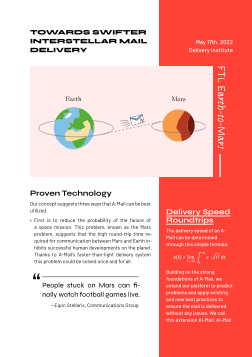
Our concept suggests three
ways that A-Mail can be best
utilized.

- First is to reduce the
  probability of the failure of
  a space mission. This problem
  is known as the Mars problem
  and suggests problems with
  human communication.

#figure(
  image("a-mail.svg"),
  caption: [
    Visualization of the FTL
    Earth-to-Mars
    comms capabilities
    enabled by A-Mail.
  ],
)
Pick a template, create your own, or just start writing. All the formatting happens automatically.
Export as a PDF, image, or a website (in preview), without touching your markup.
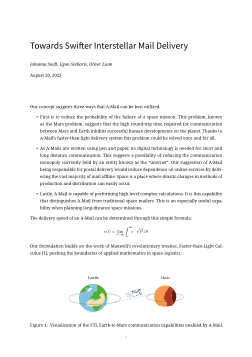
Different documents have different needs. Typst supports common types of content out of the box while giving you the power to build the rest.
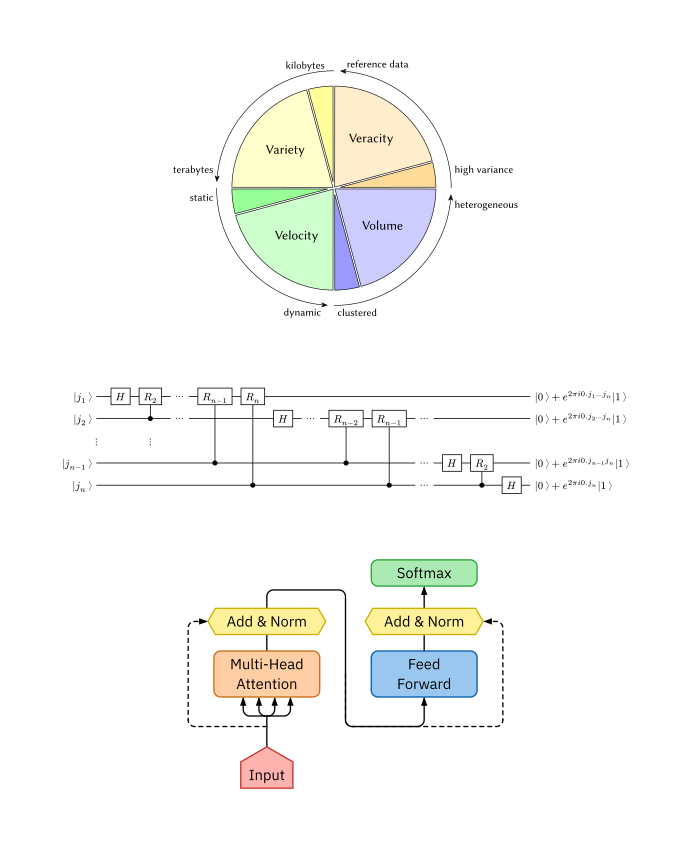
Visualizations. No matter whether a Gantt chart or an arrow diagram: Visualizations always stay up-to-date with your data.
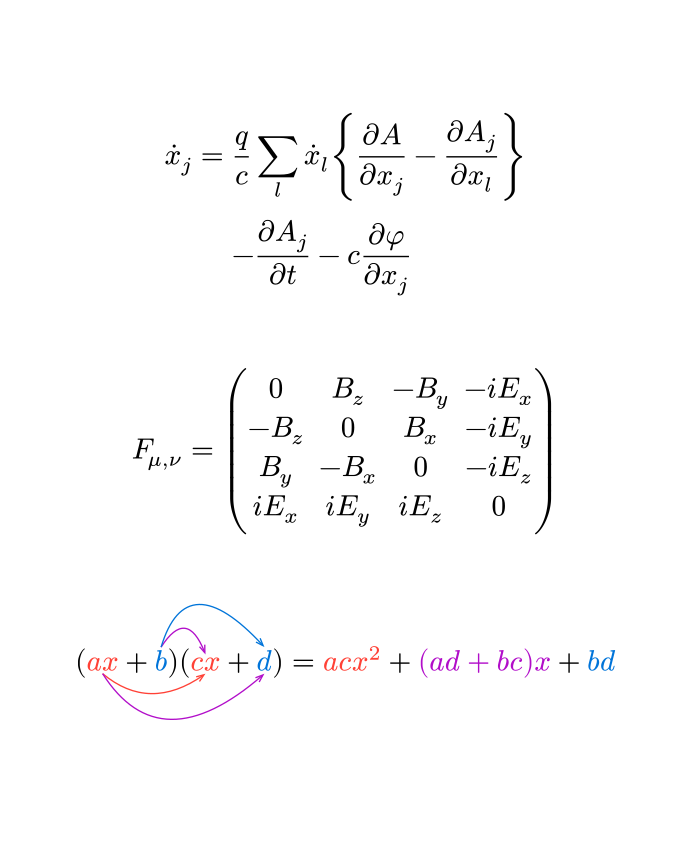
Mathematics. With beautiful equations as a first-class citizen, Typst is ready for research.
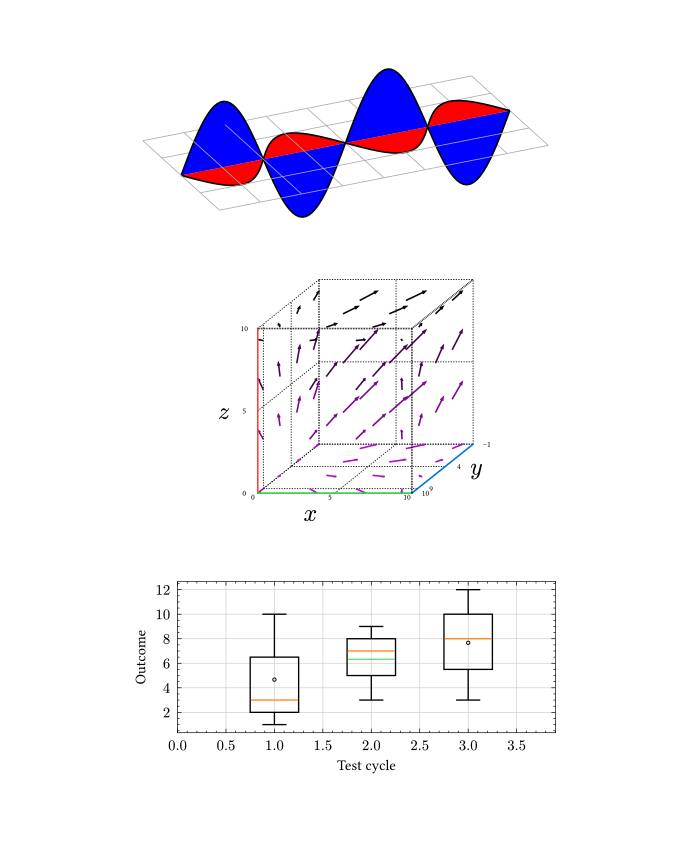
Plots and charts. Box plots, contours, paths, or just a bar chart: Pick a package and draw just the right plot for your data.
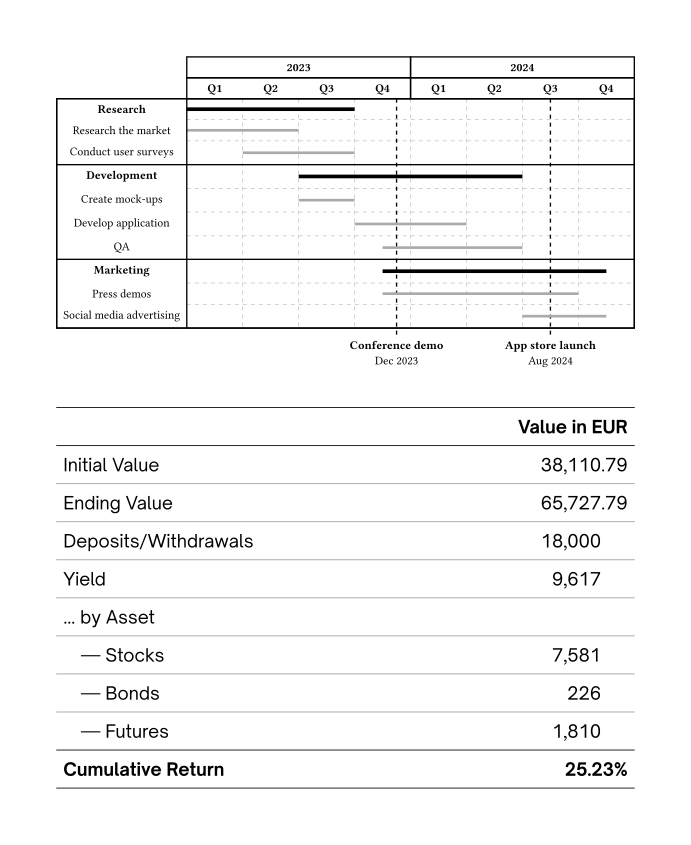
Tables. Write tables by hand or plug in CSVs or JSON. Style them all at once or tweak them individually.
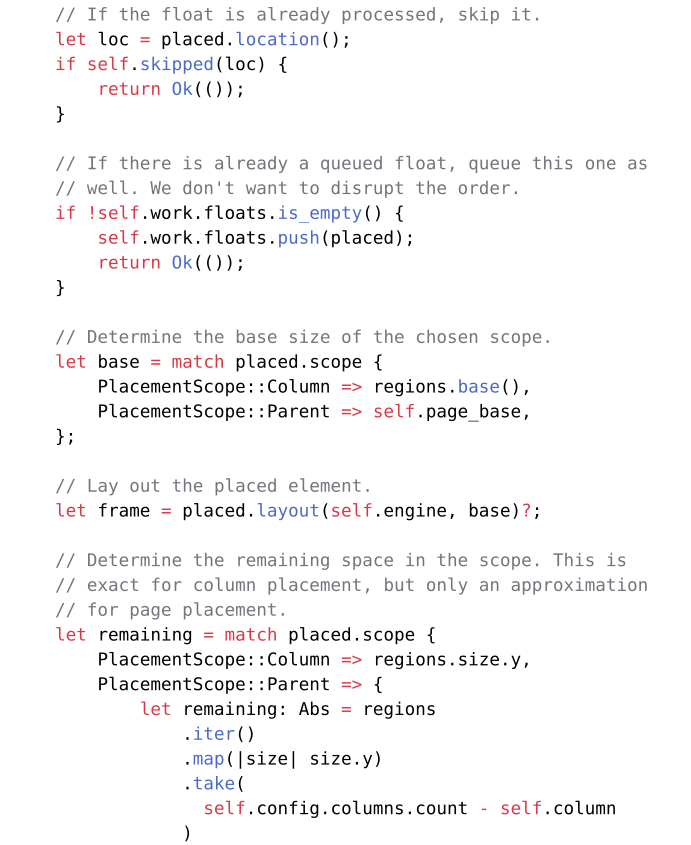
Code. Syntax highlighting, line numbers, themes, and callouts. Present code snippets just like in your IDE.
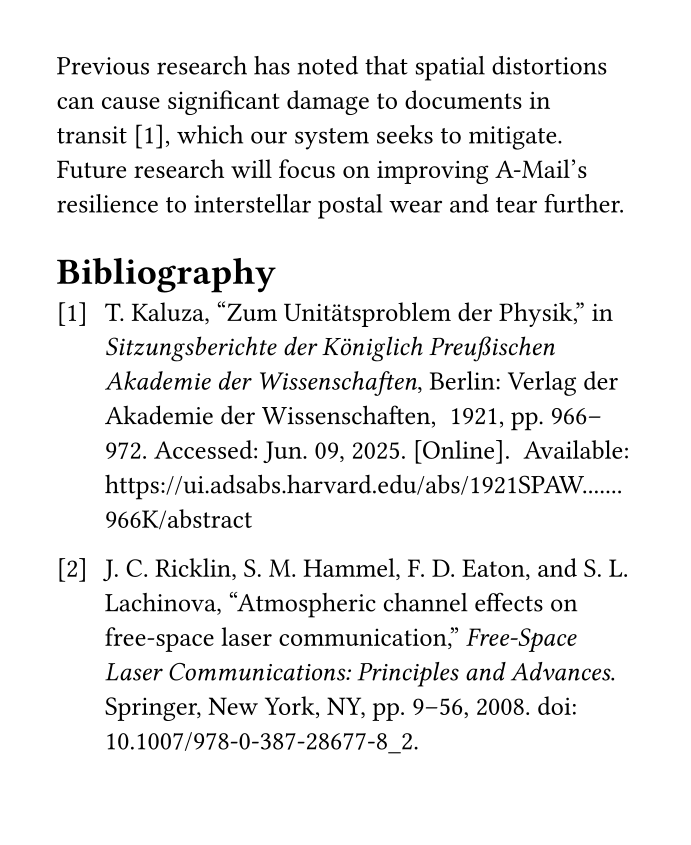
Bibliographies. Automatically format citations and references and sync with Zotero or Mendeley.
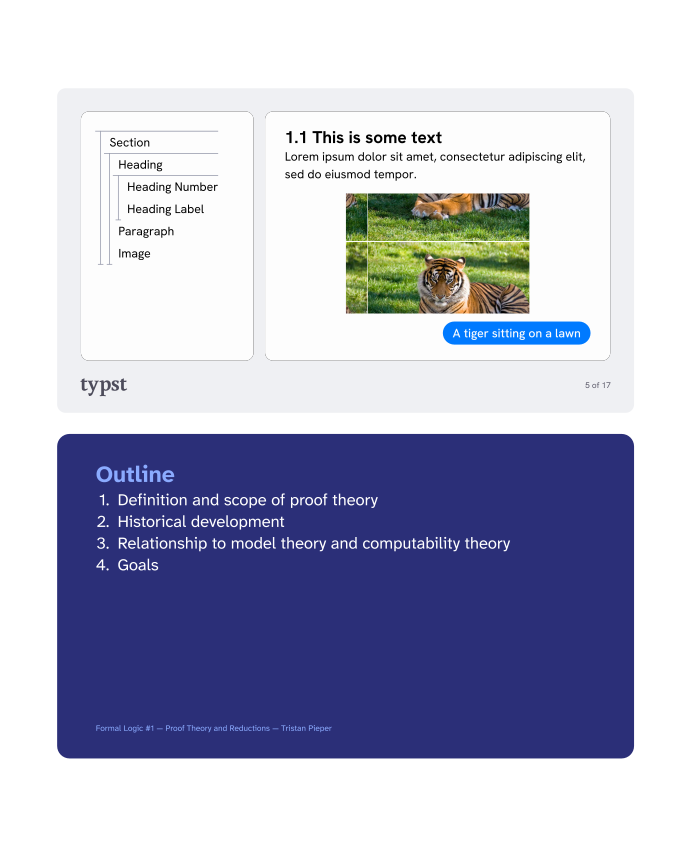
Slides. Take your content straight from the page to a slideshow. You can even present right from the app.

Anything else. Your own building blocks: With the integrated scripting features, the only limit is your imagination.
The tutorial sets you up to start writing in less than 30 minutes. And you can learn about advanced topics later in the reference.
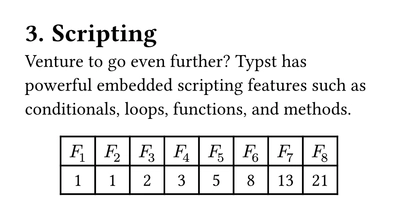
Fuse content and scripting to make your documents reactive. In the realm of a Typst document, there is nothing you can’t automate.
= Markup <markup>
With built-in syntax for the most common document elements, Typst markup is designed to be pleasant to write and read:

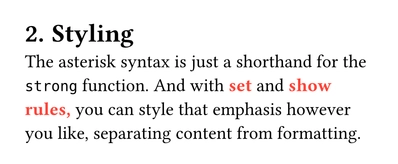
- *Strong* and _normal_ emphasis
- A reference to @markup
- Math: $a, b in { 1/2, sqrt(4 a b) }$

But that's just the surface!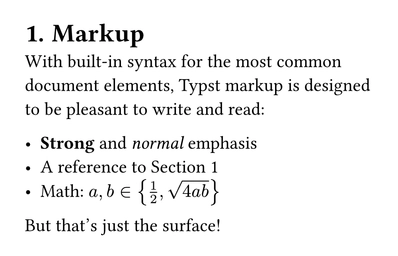
The compiler is a command line tool that turns Typst markup into PDFs, images, and web pages. It forms the basis of the Typst ecosystem, including our collaborative web app.
You touch the pane. It’s smooth. The crack is on the inside—but between the two sheets of glass.
This is the window industry’s hidden demon. Tiny, microscopic specks of nickel sulfide can be trapped in the float glass during manufacturing. Over years, these impurities slowly change crystalline structure, expanding by up to 4%. In a standard single pane, this causes a harmless chip. In a sealed, stressed IGU, it acts like a bullet from the inside. The crack often appears as a distinctive “figure eight” or butterfly shape, originating from a single point. double glazed window cracked inside
This is the "hot coffee in a cold mug" effect, scaled up. Imagine a bright winter morning: The outer pane is freezing. The inner pane, warmed by your central heating, wants to expand. But the outer glass holds the entire unit rigid via the spacer. The result? Tension builds in the inner pane until it yields. You’ll often see these cracks starting perpendicularly from the edge, then arcing. You touch the pane
Consider it a gentle, visible reminder: every high-tech system, no matter how well sealed, has a lifespan. When the line appears, it’s time to give your window a second life—one clean, warm, crack-free unit at a time. If the crack is on the room-facing side (i.e., you can feel it) and the window is still fog-free, that is likely impact damage. You can temporarily cover with clear packing tape to prevent shards from falling. But if it’s between the panes, as described above, see Part 5—repair is not an option. This is the window industry’s hidden demon
Your window frame expands and contracts at a different rate than the glass. If the installer used too little glazing tape or overtightened the retaining beads, the frame pinches the IGU. Over a few seasons of expansion, the inner pane, which has less flexibility than the outer (being further from the external buffer), gives way.
On a sunny day, the gas between the panes heats up, expands, and presses outward on both glass sheets. At night, it cools, contracts, and pulls inward. This daily breathing is normal. But if the perimeter seal is old or poorly fitted, the pressure becomes uneven. Eventually, the inner glass—the side facing your conditioned home—shatters from fatigue.
You don’t usually hear it happen. There’s no smash of baseball-bat glass, no howl of wind, no obvious intruder. You simply glance at the living room window one morning and see it: a thin, silvery line, or perhaps a web of fractures, snaking across the inner surface of the glass.
Automatically convert Word, LaTeX, Markdown, or OpenDocument Text files to Typst projects on your dashboard.
Use one of the 1100+ community packages and templates on Typst Universe. Browse the available categories below:
Our web app is the best place to use Typst and collaborate on projects. The Free Plan is rock solid, and Typst Pro takes you even further.
Typst is designed for secure, reliable, and scalable operation in big and small organizations.


A 2000-page contract note takes approximately 1 minute to compile with Typst, in stark contrast to lualatex’s 18 minutes.
Learn more about us and our journey to build a new foundation for document creation.