Enhanced/Dual Powered
Willem EPROM Programmer
User Guide
Main Board / Cables
Main Board PCB3.5
Main Board PCB4E

Main Board PCB5.0

Main Board PCB5.5C

|
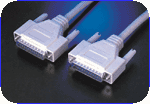
Parallel Data Cable (Printer extension cable, with male-female 25 pin connector, and pin to pin through) |
A-A type USB cable(for power) |
|
|
|
Optional Items:
|
ATMEL 89 Adapter |
ATMEL PLCC 44 Adapter |
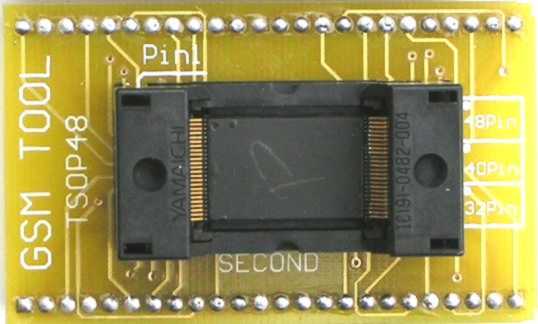
TSOP 48 Adapter |
|
|
|
|
|
FWH/HUB PLCC32Adapter |
PLCC32 Adapter |
SOIC Adapter(Simplified) |
|
On-Board |
On-Board |
|
|
AC or DC Power Adapter (9V or 12V, 200mA) |
SOIC Adapter(Professional) |
|
|
|
|
|
It seems you're referring to , not "ASTM 53B" — though the "B" likely indicates Grade B , the most common grade within that standard.
Many specifiers forget this. Field welders do not. You likely meant A53 Grade B . The confusion often comes from older drawings or shorthand: “A53B” meaning A53, Grade B. But there’s no “53B” standard. If you search for “ASTM 53B,” you’ll find nothing — a common trap for procurement agents. The Fun Fact A53 Grade B pipe is dimensionally identical to API 5L Grade B (oil/gas transmission). They can often be used interchangeably, but their manufacturing and testing requirements differ. API 5L allows higher sulfur/phosphorus. So using A53B in an API-specified line could lead to rejection , even if the pipe fits perfectly. In Summary ASTM A53 Grade B is the Toyota Corolla of steel pipe : not flashy, but reliable, cheap, and everywhere. The real interest lies not in its properties alone, but in how easily it’s confused with other specs — and how costly that confusion can be. Would you like a comparison table between A53 Grade B, A106 Grade B, and API 5L Grade B? That’s where the real engineering nuance lives. astm 53b
Hardware Installation & Configuration
|
Installation Steps
(Note: the LPT port of PC MUST set to ECP or ECP+EPP during BIOS setup. To enter the BIOS setting mode, you need press "Del" key or "F1" key during the computer selftest, which is the moment of computer just power up.)
Software Version To Use | |||
| |||
|
| |||
|
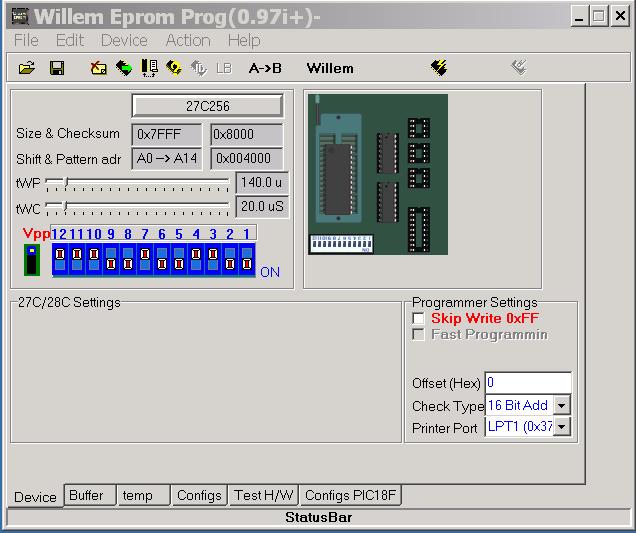
The software interface:
| |||
|
| |||
|
Hardware
Check
| |||
|
PCB3.5/PCB4E
PCB5.0
PCB5.5C
Note: the Vcc setting jumper only has effect when you are using AC adaptor as power source. For the USB power only 5V Vcc is available. For the PCB5.5C, set DIP steps: 1. press DIP Set button twice to check current DIP bit position. Then set it again for ON or OFF. 2. press DIP Bit shift button to shift the DIP bit position to where need to set. And then press DIP Set button twice to check current DIP bit position. Then set it again for ON or OFF. 3. Repeat those steps till all DIP bit ae set same as software indicated. For PCB5.5C voltage and Special chip selection: 1. Put back the safety jumper. 2. Press the voltage button and hold for 1 second, the voltage LED should move to next. Repeat till desired voltage LED light up. 3. Press the chip selection button and hold for 1 second, the chip LED should move to next. Repeat till desired LED light up. 4. Remove the safety jumper to lock the selected voltage and chip selection
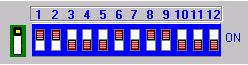
DIP Switch (PCB3.5, PCB5.0)
When programming one chip, follow the program prompt to set DIP switch .
|
It seems you're referring to , not "ASTM 53B" — though the "B" likely indicates Grade B , the most common grade within that standard.
Many specifiers forget this. Field welders do not. You likely meant A53 Grade B . The confusion often comes from older drawings or shorthand: “A53B” meaning A53, Grade B. But there’s no “53B” standard. If you search for “ASTM 53B,” you’ll find nothing — a common trap for procurement agents. The Fun Fact A53 Grade B pipe is dimensionally identical to API 5L Grade B (oil/gas transmission). They can often be used interchangeably, but their manufacturing and testing requirements differ. API 5L allows higher sulfur/phosphorus. So using A53B in an API-specified line could lead to rejection , even if the pipe fits perfectly. In Summary ASTM A53 Grade B is the Toyota Corolla of steel pipe : not flashy, but reliable, cheap, and everywhere. The real interest lies not in its properties alone, but in how easily it’s confused with other specs — and how costly that confusion can be. Would you like a comparison table between A53 Grade B, A106 Grade B, and API 5L Grade B? That’s where the real engineering nuance lives.